
Capital markets are becoming more prominent in India's growth story, with an expanding share in capital formation and investment landscape on the back of technology, innovation and digitisation, according to the Economic Survey 2023-24 tabled in Parliament on Monday. Further, Indian markets are resilient to global geo-political and economic shocks, it added. "Despite heightened geo-political risks, rising interest rates and volatile commodity prices, Indian capital markets have been one of the best performing among emerging markets in FY24," the Economic Survey said.

Buoyancy in the real estate sector along with improved construction activities created jobs and facilitated the return of migrant workers to cities, the Economic Survey for 2022-23 tabled in Parliament on Tuesday said. This assumes significance in view of loss of jobs due to lockdown restrictions imposed in various parts of the country from time to time amid different waves of pandemic since March 2020. The survey points towards sustained recovery in the economic activities during 2022-23 fiscal year.

The outlook for India's financial sector appears bright, but it needs to brace for likely vulnerabilities, said Economic Survey 2023-24 tabled in Parliament on Monday. The Indian financial sector is at a "turnpike moment", it said, adding that the dominance of banking support to credit is being reduced, and the role of capital markets is rising. For a country that aspires to be a developed nation by 2047, this is a long-awaited and welcome development, it said.

Growth in corporate profits needs to be commensurate with wages to boost the economy, Economic Survey 2024-25 said, noting that sharp disparities between the two pose risk to the economy by curbing demand. The document tabled in Parliament on Friday noted that while the labour share of GVA (gross value added) shows a slight uptick, the disproportionate rise in corporate profitsredominantly among large firmsaises concerns about income inequality.

Nestle surged 4.25 per cent after the FMCG major reported 4.94 per cent increase in net profit at Rs 688.01 crore for the quarter ended December 31, 2024. IndusInd Bank, Titan, Tata Motors, Tata Steel, ITC and Maruti were the other major gainers. ITC Hotels, Bharti Airtel, Bajaj Finserv, Bajaj Finance and ICICI Bank were among the laggards.

If he cannot do it this term by using his bureaucracy and experts from different fields, it will be a tragedy, asserts Ramesh Menon.

The President will address both the Houses of Parliament assembled together in the Lok Sabha chamber on Friday and Finance Minister Nirmala Sitharaman will present the General Budget on Saturday.

The take by the Economic Survey 2024-25 on work hour week had come weeks after Larsen & Toubro Ltd Chairman and Managing Director SN Subrahmanyan sparked off a raging debate on social media when he said employees should work 90-hour a week, including on Sundays rather than sit at home.

The Indian rupee depreciated a modest 2.9 per cent in the first nine months of the current fiscal, performing better than other currencies like the Canadian Dollar, South Korean Won and the Brazilian Real, according to the Economic Survey tabled in Parliament on Friday. The value of the Indian Rupee (INR) is market-determined, with no target or specific level or band.

As the Centre announced the inclusion of caste enumeration in the next census on Wednesday, opposition parties said it is a victory for their long-standing demand and sought time-bound implementation.

In the Sensex pack, major gainers were Tech Mahindra, Wipro, Bajaj Finserv, Infosys, SBI and PowerGrid. NSE Nifty rallied 237.90 points to 17,339

The Indian economy needs to generate an average of nearly 78.5 lakh jobs annually until 2030 in the non-farm sector to cater to the rising workforce, according to the Economic Survey for 2023-24. The Survey tabled in Parliament on Monday also laid emphasis on the private sector's role to create employment in the country saying "In more than one respect, the action lies with the private sector. "In terms of financial performance, the corporate sector has never had it so good."

The Indian rupee may remain under depreciation pressure on account of plateauing of exports and subsequent widening of the current account deficit, said the Economic Survey 2022-23 tabled in Parliament on Tuesday. It said the "risks to the current account balance stem from multiple sources". The country's current account deficit (CAD) widened to 4.4 per cent of the GDP in the quarter ended September from 2.2 per cent in April-June due to higher trade gap, as per latest data of the Reserve Bank of India.

They said a 'mock poll' would be conducted in the Central Hall of the Samvidhan Sadan at around 2:30 PM on Monday after the briefing on the procedure to vote in the vice presidential polls.

RBI's projection of retail inflation at 6.8 per cent in the current fiscal is neither too high to deter private consumption, nor so low as to weaken inducement to invest, the Economic Survey said on Tuesday. However, entrenched inflation may prolong the tightening cycle and therefore, borrowing costs may stay 'higher for longer', it said. The Economic Survey 2022-23 was tabled in Parliament by Finance Minister Nirmala Sitharaman.
Watch all the proceeding from the Parliament.

The stage is set for a direct contest between NDA nominee C P Radhakrishnan and joint opposition candidate B Sudershan Reddy for the vice-presidential election. The BJP-led alliance has a clear edge in the poll necessitated due to the sudden resignation of Jagdeep Dhankhar.

India has already become the world's fifth largest economy in the 75th year of Independence and will reach the $3.5 trillion mark by end-March, said the Economic Survey tabled in Parliament on Tuesday. In real terms, the economy is expected to grow at 7 per cent for the year ending March 2023. This follows an 8.7 per cent growth in the previous financial year.

Foreign direct investment into the country is expected to rebound in the coming months on account of India's high economic growth, and steps to further improve the business environment of India, the Economic Survey said on Tuesday. The rise in global uncertainty in the wake of the Russia-Ukraine conflict, FDI equity inflows in the manufacturing sector in the first half of the current fiscal (April-September) fell below its corresponding level in the first half of 2021-22, the document, which was tabled in Parliament, said. The monetary tightening at the global level has further restricted the FDI equity inflows, the survey said.

As anti-establishment protests led by Nepal's Gen Z continue across the country, youth leaders at the forefront of the demonstrations have stated that the widespread corruption and political stagnation were the core reasons behind their mass mobilisation against the government.

As one of the remedial measures, it has called for better connectivity of ports with hinterland to avoid congestions and faster movement of goods.
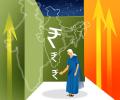
India no longer needs big ticket reforms but small and basic ones to drive the growth forward, Chief Economic Advisor V Anantha Nageswaran said on Monday. Addressing the media after the Economic Survey 2023-24 presented in Parliament, Nageswaran said there is a need to pursue all possible approaches without any ideological orientation. "In terms of the kind of reforms that we need to do, it is no longer big-ticket reforms that dominate your front pages but more about grunt works.

ITC, State Bank of India, HCL Technologies and IndusInd Bank were the other big laggards. NTPC, UltraTech Cement, HDFC Bank and Mahindra & Mahindra were among the gainers.

The pre-Budget Economic Survey on Thursday said the country's tax system continues to be complex and asked the government to undertake further reforms, including implementation of a uniform tax structure -- goods and services tax.

The stage is set for a direct contest between NDA nominee C P Radhakrishnan and joint opposition candidate B Sudershan Reddy for the September 9 vice-presidential election. Nominations have been scrutinized and accepted.

From the 30-share blue-chip pack, ITC Hotels, IndusInd Bank, Mahindra & Mahindra, Sun Pharma, UltraTech Cement and NTPC were among the biggest gainers. Titan, Kotak Mahindra Bank, Nestle, Asian Paints, HCL Tech and ICICI Bank were among the laggards.

Watch all the debates and discussions in Parliament
Watch all the proceedings and live debates.
With regard to foreign institutional investors, the survey said that there are signs that FIIs who had recorded net outflows in 2008-09 may have returned to the Indian market in the last two months.
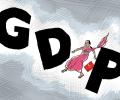
India's Gross Domestic Product (GDP) is expected to expand by 9.2 per cent in the current financial year, according to the Economic Survey 2021-22 tabled in the parliament on Monday. "Advance estimates suggest that the Indian economy is expected to witness real GDP expansion of 9.2 per cent in 2021-22 after contracting in 2020-21. "This implies that overall economic activity has recovered past the pre-pandemic levels," Economic Survey noted. Almost all indicators show that the economic impact of the "second wave" in Q1 was much smaller than that experienced during the full lockdown phase in 2020-21 even though the health impact was more severe, it said.
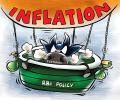
Amid a debate on the basis of a monetary policy stance, one may be curious enough to know how non-food retail inflation has behaved over the years in India. Let the eager souls catch a glimpse of facts. In the past 10 years, non-food inflation came down below 4 per cent on two occasions - pre-Covid period of 2019-20 and now in the first four months of the current financial year (FY25).
'Earlier, we used to talk about a deficit economy. There is a deficit in democracy' 'If you read superficially Gandhi and Ambedkar and Nehru, some misconceptions and misunderstanding come to mind, as if they were at loggerheads and they differed radically in their views' 'India is one nation. There is only one citizenship. No citizenship for South India and no citizenship for North India and another for the Northeast'
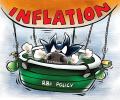
The Reserve Bank of India (RBI) has projected retail inflation at 4.2 percent for the next financial year beginning April while retaining the forecast for 2024-25 at 4.8 percent. The central bank attributed the expected easing of inflation to good kharif production, winter-easing in vegetable prices and favorable rabi crop prospects. However, the RBI also noted that continued uncertainty in global financial markets coupled with volatility in energy prices and adverse weather events presents upside risks to the inflation trajectory.
High domestic food prices are still a cause for concern despite India hugely benefiting from a slump in global oil and commodity prices that pushed inflation into negative zone, the Economic Survey said.

India must improve business climate.

India's primary deficit (Centre and states) for FY21 is assumed to be 6.8 per cent of GDP, according to the Economic Survey tabled in Parliament on Friday. It said the Covid-19 pandemic has created a significant negative shock to demand. Active fiscal policy -- one that recognises that fiscal multipliers are disproportionately higher during economic crises than during economic booms -- can ensure that the full benefit of seminal economic reforms is reaped by limiting potential damage to productive capacity.
A day before the announcement of the Union Budget for 2004-05, the Economic Survey called for "overhauling" the tax exemption regime saying low Tax:GDP ratio was a prime concern and it was coming in the way of improving government finances.

Iconic dialogues from Bollywood movies like Sunny Deol's Damini, have found its place in the Economic Survey 2018.

Chief executive officers (CEOs) across sectors have expressed intentions to expand capacities, expecting the government's target to invest a record Rs 11.11 trillion on infrastructure development will act as a catalyst for a jump in consumer demand. "With the government planning a capex of Rs 11.11 trillion, private sector investment will come in a big way. Companies will be preparing for it right from today," H M Bangur, chairman of Shree Cement, told Business Standard. For the past few years, the investment scene in India has been dominated by government capital expenditures; private investments in the manufacturing sector have remained muted.

The Indian government's announcement of 10,000 additional seats in medical colleges next year, part of a plan to add 75,000 seats over five years, has been welcomed by education experts and stakeholders. The move aims to address the shortage of medical professionals and reduce the outflow of Indian medical students to other countries. The budget also includes infrastructure expansion at five new IITs to accommodate 6,500 more students and an allocation of Rs 500 crore to set up a Centre of Excellence in Artificial Intelligence for education.
